
Among Sensex stocks, SBI, IndusInd Bank, HDFC Bank, Axis Bank, HDFC, Tech Mahindra, ICICI Bank, Ultratech Cement, L&T, Bajaj Finserv, Reliance, HCL Tech, Asian Paints, Wipro and M&M were the major losers. On the other hand, HUL advanced the most by 1.14 per cent. Maruti, Tata Steel, NTPC and Sun Pharma also posted gains.

Amid increasing volatility and recession fears looming over global markets that has led to the decline in wealth of a number of billionaires, Gautam Adani was the only one to buck the trend. The billionaire added $43.3 billion in net worth between Diwali 2021 (November 4) and this year's Diwali (October 24) according to Bloomberg data. He added more wealth than the gross domestic product (GDP)of more than a dozen Indian states.
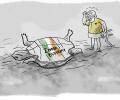
The International Monetary Fund (IMF) on Tuesday slashed India's growth forecast for 2022-23 (FY23) by 80 basis points to 7.4 per cent, citing less favourable external conditions and rapid policy tightening by the central bank. In its update to the April World Economic Outlook, the IMF said that though a global recession in 2022 was ruled out with a growth estimate of 3.2 per cent, the balance of risks was squarely to the downside, driven by a wide range of factors that could adversely affect the global economic performance. "The risk of recession is particularly prominent in 2023, when in several economies growth is expected to bottom out, household savings accumulated during the pandemic will have declined, and even small shocks could cause economies to stall.

Mergers and acquisitions (M&As) by Indian companies have declined sharply by 80 per cent so far this year, in contrast with the same period last year, as bankers predict lower deal volumes due to falling profit margins of Indian companies and feeble stock markets. The decline in Adani Group shares has also hit buyer sentiment. According to data from Refinitiv, M&As in India stood at $3.3 billion from 253 deals, year-to-date (YTD) - a fall of 80 per cent year-on-year (YoY). Cross-border deals by Indian companies were also down 84 per cent to just $1.5 billion.
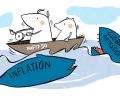
'...over the long-term can be done only by investing in equities.' 'And during weak macros, one needs t1o allocate more than drawing it down, because they offer the best entry point.'

The last couple of years of frenzied activity in the MRO space made many believe that time is not far when umpteen number of MROs will start servicing narrow and wide-bodied aircraft on the Indian soil like motor garages. While many of the projects announced over the last couple of years have not seen the light of the day, Aviation firm AirWorks which launched India's first MRO in airline segment at Hosur (Tamil Nadu) is yet to land their first anchor customer.

In 2022, gold emerged as the top performer among all conventional asset classes with over 14 per cent returns mainly owing to the depreciation of the rupee.
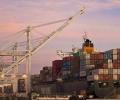
Exports declined for the fourth-consecutive month by 10.3 per cent year-on-year to $34.98 billion in May, while the trade deficit widened to a five-month high of $22.12 billion. According to the data released by the commerce ministry on Thursday, key export sectors recording negative growth include petroleum products, gems and jewellery, engineering goods, ready-made garments of all textiles and chemicals. Imports also declined 6.6 per cent, six-month in a row, to $57.1 billion against $61.13 billion in the same month last year, the data showed.

The government on Monday said it was willing to discuss every issue under rules during the Budget session of Parliament and sought the support of the Opposition in running the proceedings smoothly.
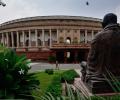
The recess allows department-related standing committees to examine demands for grants of various ministries. The Finance Bill and related demands for grants are passed in the second phase of the Budget session.

Benchmark indices finished on a weak note on Thursday, extending their previous day's decline amid a negative trend in global equity markets after the US Fed hiked interest rates by 75 basis points. The 30-share BSE Sensex declined 69.68 points or 0.11 per cent to settle at 60,836.41. During the day, it tanked 420.95 points or 0.69 per cent to 60,485.14.

'Markets are not expensive; they are fairly priced.'

Benchmark indices ended nearly 1 per cent lower on Wednesday, tracking a weak trend in global markets and continuous foreign fund outflows. The 30-share BSE Sensex fell 509.24 points or 0.89 per cent to settle at 56,598.28. During the day, it tanked 621.85 points or 1.08 per cent to 56,485.67. Similarly, the broader NSE Nifty declined 148.80 points or 0.87 per cent to end at 16,858.60.
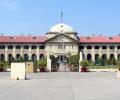
A division bench of Justice D K Upadhyay and Justice Saurav Lavania also annulled the draft notification issued by the Uttar Pradesh government on December 5 for reservation of Other Backward Classes (OBCs) in the urban local body elections.
Since 1945, most US presidential elections have been accompanied by a recession.

Puri said the government has a moral duty to provide energy at affordable rates to consumers.
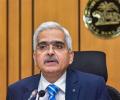
The RBI raked in a massive net income gain from foreign exchange currency sales as a buffer for the rupee during tumultuous geopolitical upheavals last year owing to Russia's invasion of Ukraine.
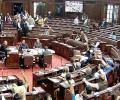
The opposition leaders are expected to meet at Leader of Opposition in Rajya Sabha Mallikarjun Kharge's office in the Parliament complex around 10 am, sources said.

India's current account deficit is expected to deteriorate in the current fiscal on account of costlier imports and tepid merchandise exports, according to the Finance Ministry's monthly economic review. The review released on Thursday by the ministry also said that global headwinds would continue to pose a downside risk to growth as crude oil and edibles, which have driven inflation in India, remain major imported components in the consumption basket. For the present, it said, "their global prices have softened, as fears of recession have dampened prices somewhat. This would weaken inflationary pressures in India and rein in inflation."

The benchmark Nifty50 managed to reclaim its 200-day moving average (DMA) on Wednesday but about half of top 500 stocks continue to languish below this key technical indicator. The 200-DMA - nearly a year's average of closing prices - is analysed by traders to understand the market sentiment. A fall below these levels indicates a weak trend.
The House, which was briefly adjourned in the morning, will now meet at 11 am on March 13 after recess.

Venture capital (VC) investments in Indian startups plunged over 38 per cent in 2022 as economic uncertainty and market volatility affected fundraising and investment activities, GlobalData said on Tuesday. In a statement, GlobalData said an analysis of its financial deals database reveals that "a total of 1,726 VC funding deals worth $20.9 billion were announced in India in 2022 compared to 1,715 deals worth $33.8 billion in 2021." "The ongoing economic uncertainty and market volatility continue to affect the fundraising and investment activities in India and subsequently VC investment in the country startups suffered a massive year-on-year 38.2 per cent decline in value terms during 2022," the data and analytics company said.

Benchmark BSE Sensex rose by 160 points on Thursday in choppy trade following gains in select banking and auto counters amid mixed global cues. The 30-share index gained 160 points to settle at 62,570.68 as 13 of its components advanced while 17 declined. The barometer opened lower but later gained momentum to touch a high of 62,633.56 in the day's trade.

'Every slide in the power point presentation had a graph with years like 2006, 2008, 2010 on the X axis... Most lines seemed to lie inert horizontally and many seemed to dip despondently, except the red line for China which seemed to rise triumphantly in each slide...' B S Prakash attends the World Economic Forum's Latin American version.

'Our advice is to put money into equities now rather than staying away.'

Vignettes from an important chapter in the life of a man who left his kingdom to bring compassion to the world.

The Supreme Court will hear on Tuesday NCP leader Mohammed Faizal's plea against the Lok Sabha Secretariat for not withdrawing a notification disqualifying him as an MP upon his conviction and 10-year sentence that was later stayed by the Kerala high court.

The cost of living crisis is the biggest short-term risk the world is facing, while the failure of climate mitigation and climate adaptation is the largest long-term concern, the World Economic Forum said on Wednesday. Releasing its annual Global Risks report in London ahead of its Davos summit next week, the WEF also said geopolitical rivalries and inward-looking stances will heighten economic constraints and further exacerbate both short- and long-term risks. The Global Risks 2023 report, drawing on views of over 1,200 experts, policy-makers and industry leaders from across the world, also urged countries to work together to avoid 'resource rivalries'.

Expect heightened volatility and stress to hit the markets. Caution may be the need of the hour, alerts Akash Prakash.

The tea industry's cup of woes brimmeth - scanty rainfall and pest attacks have dragged down production in May, prices are lower than last year, and demand from some export markets is muted. Production in North Bengal - comprising the Dooars, Terai, and Darjeeling - is majorly affected; parts of Assam are also hit. Arijit Raha, secretary general, Indian Tea Association (ITA), said that the Tea Board numbers for April show a crop loss of about 9 per cent for North Bengal, compared to last year.
Dividend payouts seem recession-proof.

Lok Sabha could function for only 45 hours this Budget Session against its scheduled 133.6 hours because of daily disruptions and frequent adjournments, a think tank data has shown.

What's different this time is that global financial stress -- which has its genesis in four policy choices made in recent years -- is juxtaposed with a more resilient real economy, observes Sajjid Z Chinoy, chief India economist at J P Morgan.

Gold prices have surged nearly 18 per cent, so far, in the calendar year 2022 (CY22) to around $2,050 per ounce against the backdrop of the ongoing Russia-Ukraine war and there is more headroom over the next few months, believe analysts at Goldman Sachs who expect the yellow metal to become costlier by another 25 per cent to $2,500 an ounce by the year-end. Goldman Sachs, earlier, had raised its 12-month gold price forecast to $2,150 per ounce considering that an impending US growth slowdown would lead to increased concerns of a US recession and incentivise 300 tonnes of inflows into gold ETFs. At the beginning of the Russia-Ukraine tensions, Goldman Sachs had suggested the resultant rally in commodities could deteriorate the developed market (DM) growth-inflation mix, increase concerns of a American recession, and push gold ETF inflows to 600 tonnes and, in turn, lift gold prices to $2,350 an ounce in 12 months.

'If there is any reason to change my holding in Adani group stocks, the Hindenburg report on the group is not the one.'

It has noted that melting glaciers due to any impact of climate change will not only severely affect the flow in Himalayan river system but will also give rise to natural disasters.
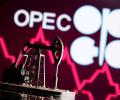
Changes in global oil and gas rates matter more to India's economy than other major economies because the country imports around 87 per cent of its oil, half of its gas in the form of LNG, and over 60 per cent of its LPG.
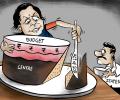
Kerala Finance Minister KN Balagopal on Friday urged the Centre to provide more fiscal powers to the states as well as increase the shareable proportion of the GST collections. Besides, he asked the central government to expedite approval for the semi-high-speed railway line or the Silverline project from Thiruvananthapuram to Kasargod. The project is mired in controversies.

In a first since last year's state elections, West Bengal Chief Minister Mamata Banerjee on Friday held a 'courtesy meeting' with Leader of the Opposition Suvendu Adhikari at her chamber in the state assembly, raising eyebrows in political circles.

Given wild swings, investors are wondering where the metal market is going. There was a strong uptrend in industrial metal through much of the last three years due to fears of supply chain issues - first due to Covid-19 and then due to the Ukraine War. That uptrend broke down as it became apparent that global growth would moderate as inflation rose and Western Europe (the EU plus the UK) went into a near-recession and China was in a rolling lockdown.
